← Projects / 001
The Tiny Project
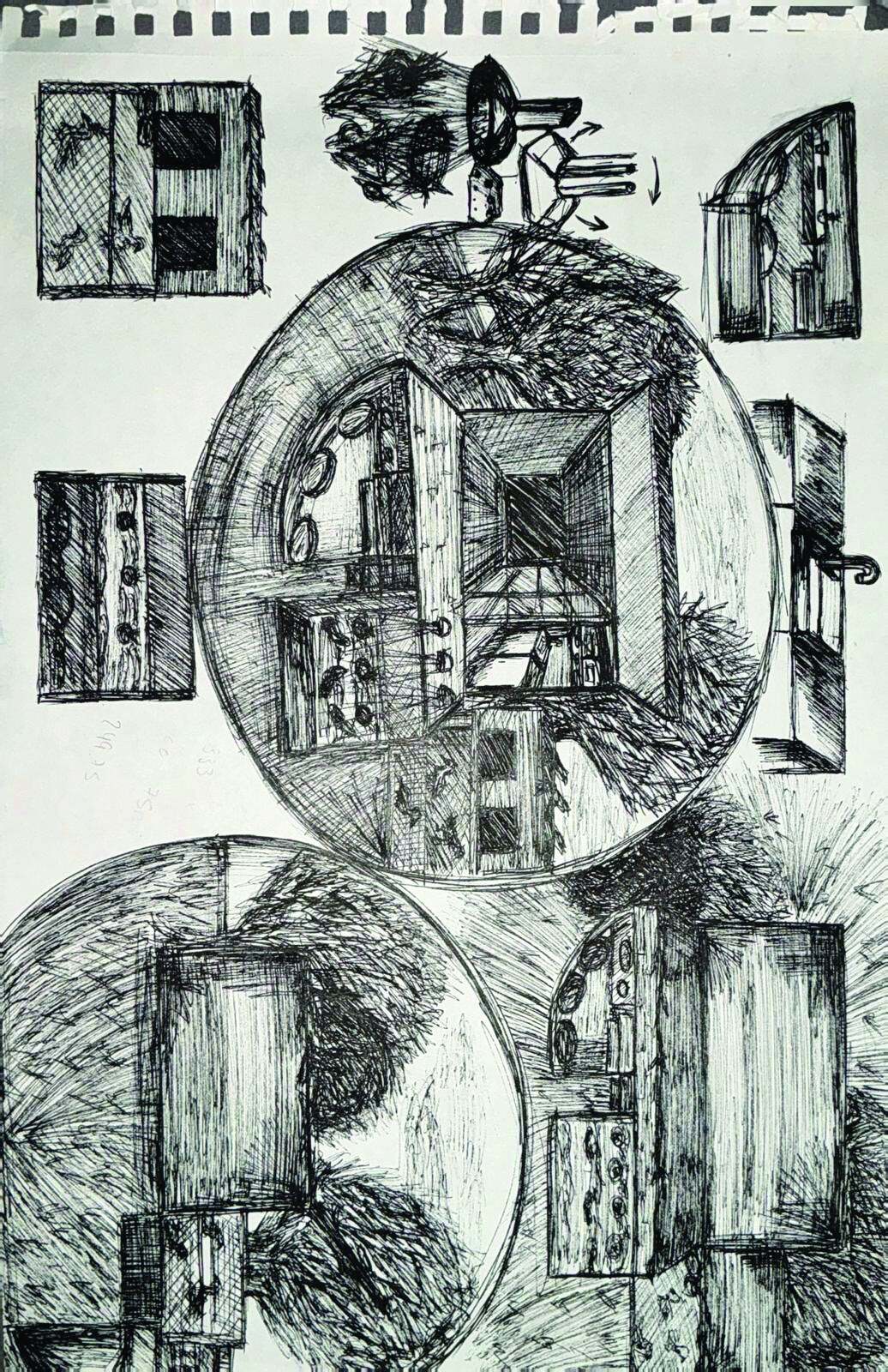
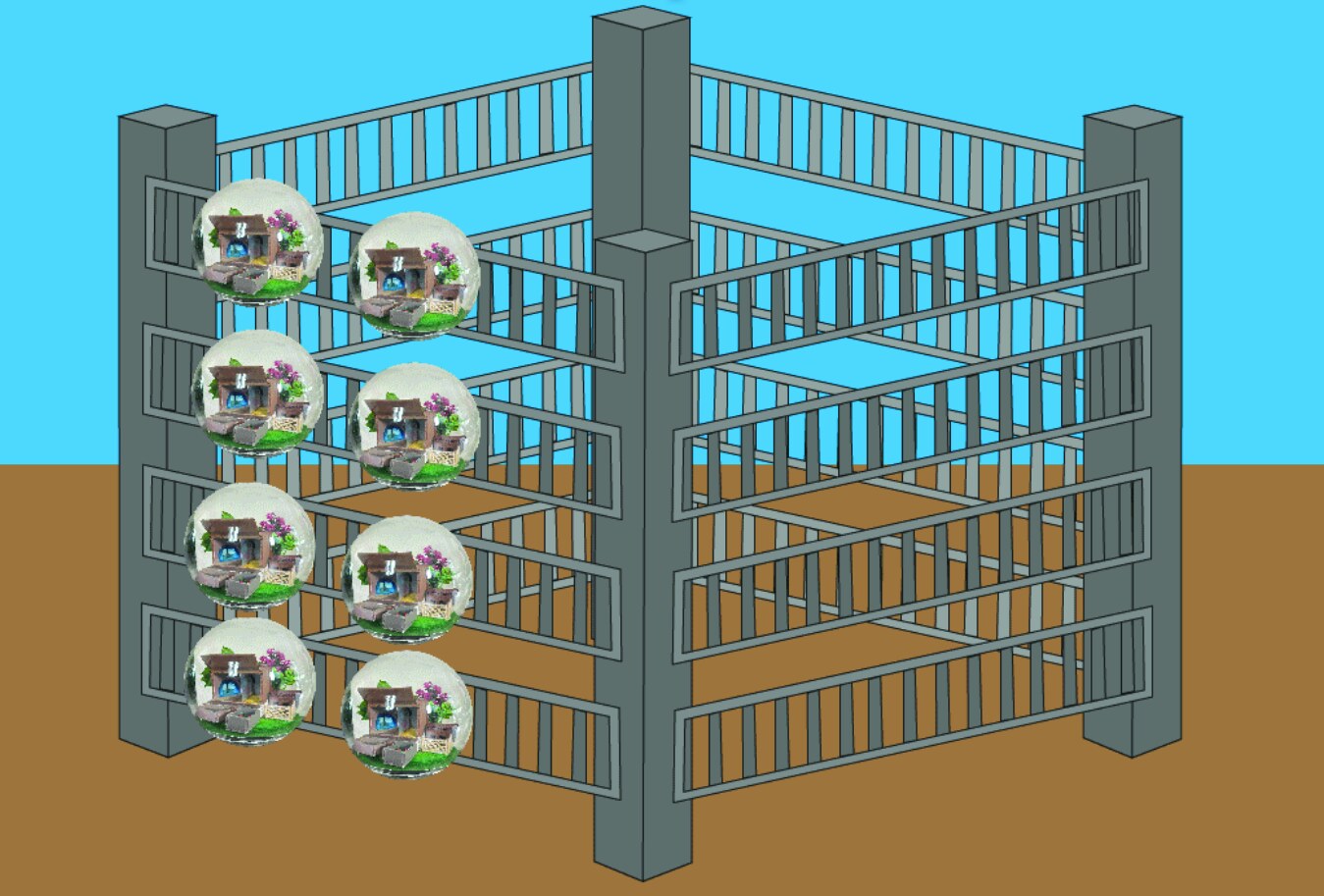
A scaffold of vertical timbers holding eight glass spheres — each a self-sufficient module of life on a small island.
Project Data
- Year
- 2024 — 2025
- Location
- Cyprus
- Typology
- Compact Modular Dwelling
- Status
- Studio
- Medium
- Pencil, ink, gouache, digital, physical model, animation
- Subject
- A modular, self-sufficient living unit
Description
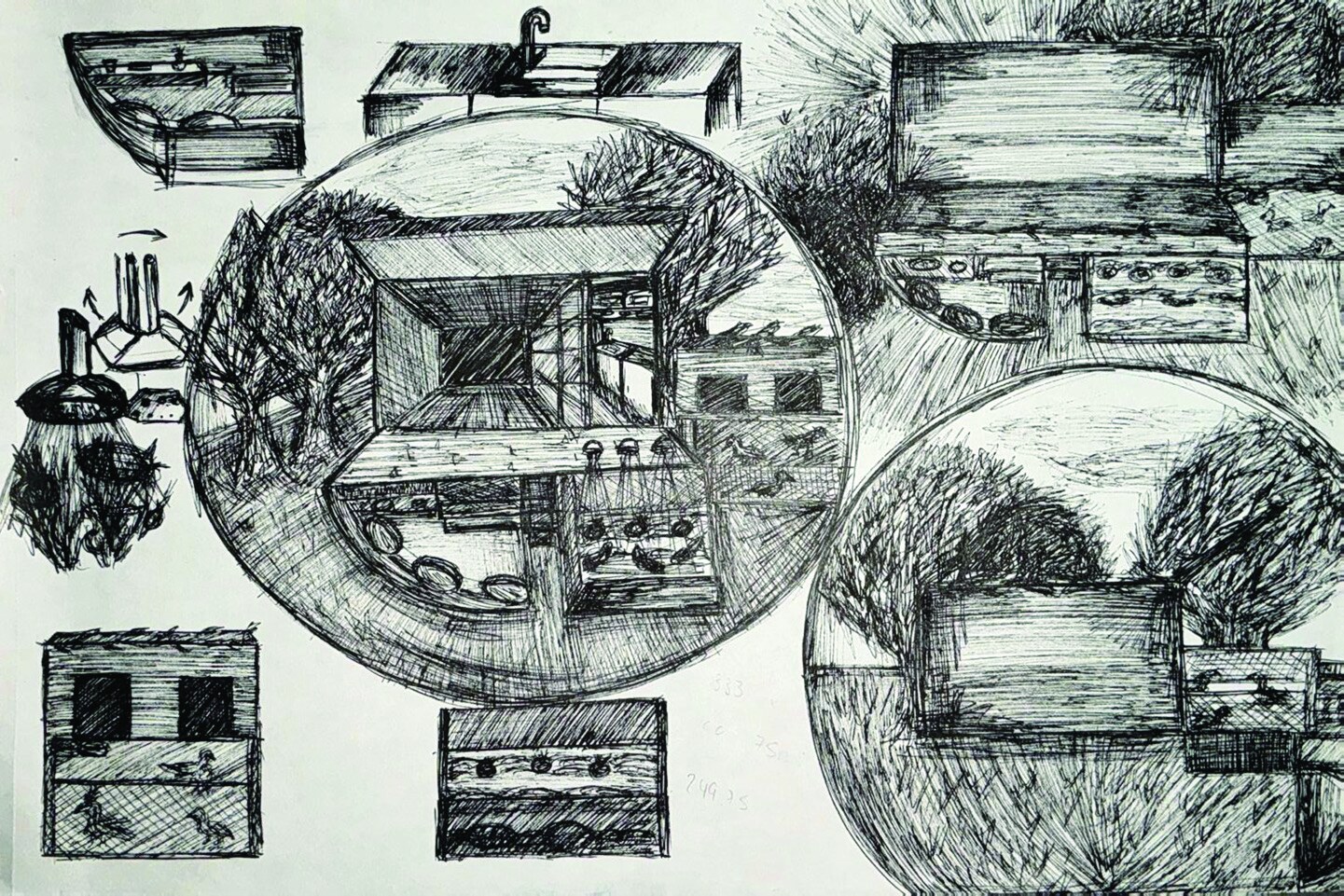
Growing up on a small island shaped the way I think about architecture — not only as a profession, but as something tied to society, culture, and place. Large-scale structures are not always suitable for the environmental and spatial conditions of my country, so I wanted this project to explore a more sustainable and flexible way of living through a compact modular system with a small "tiny house" volume.
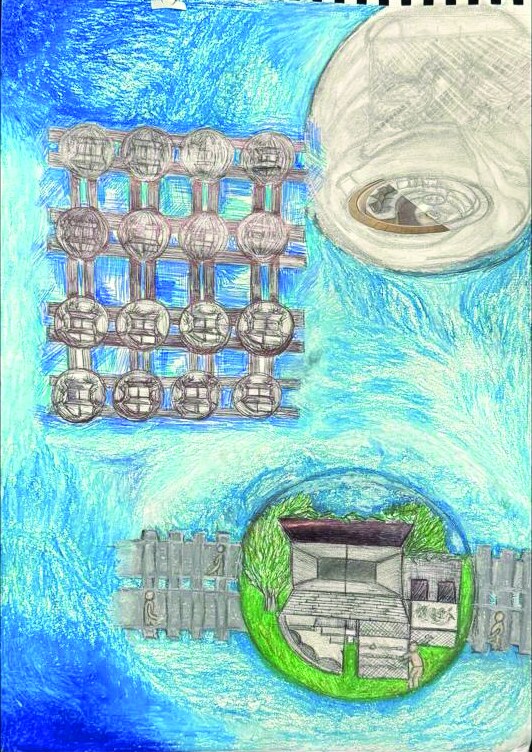
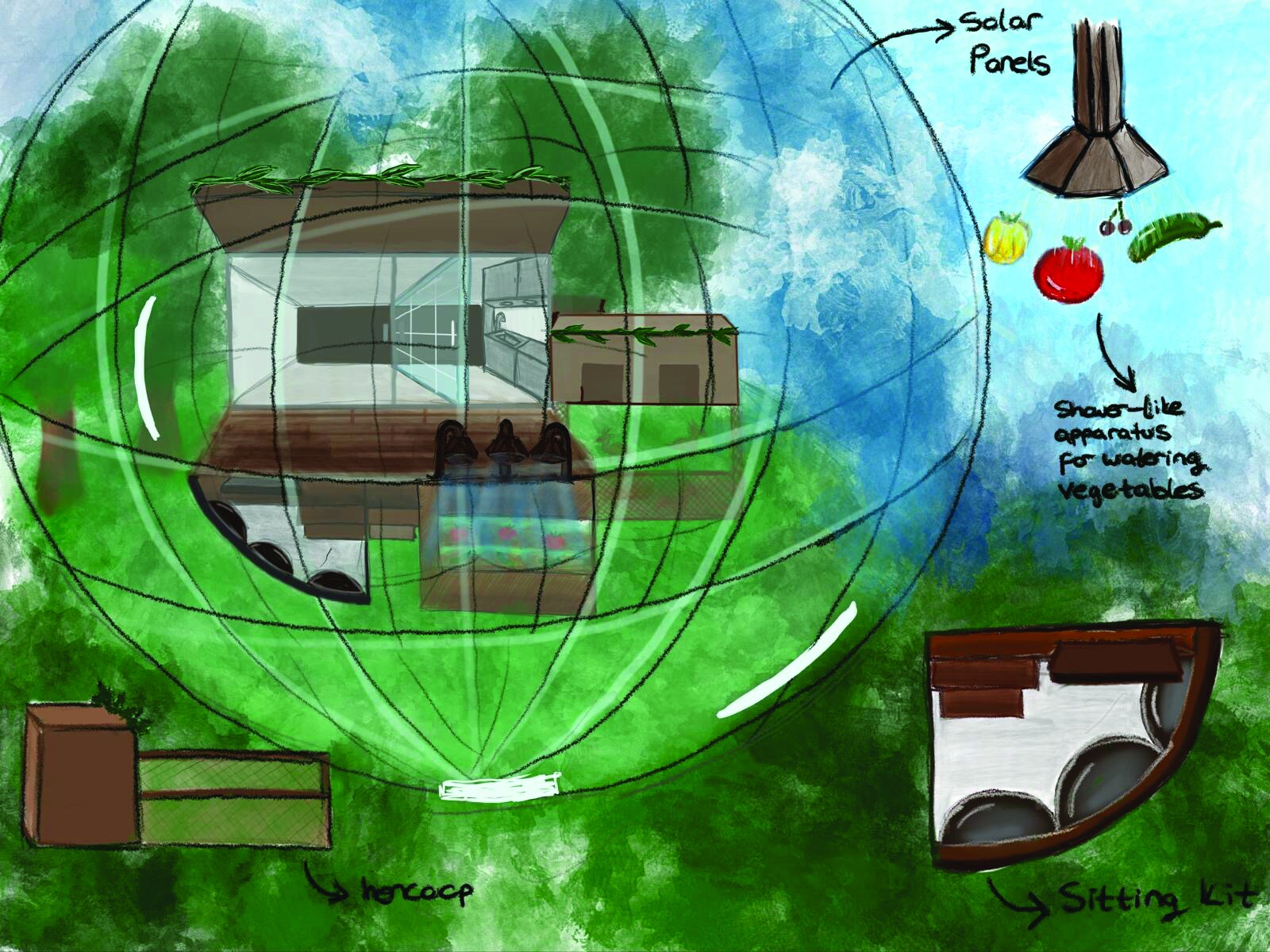
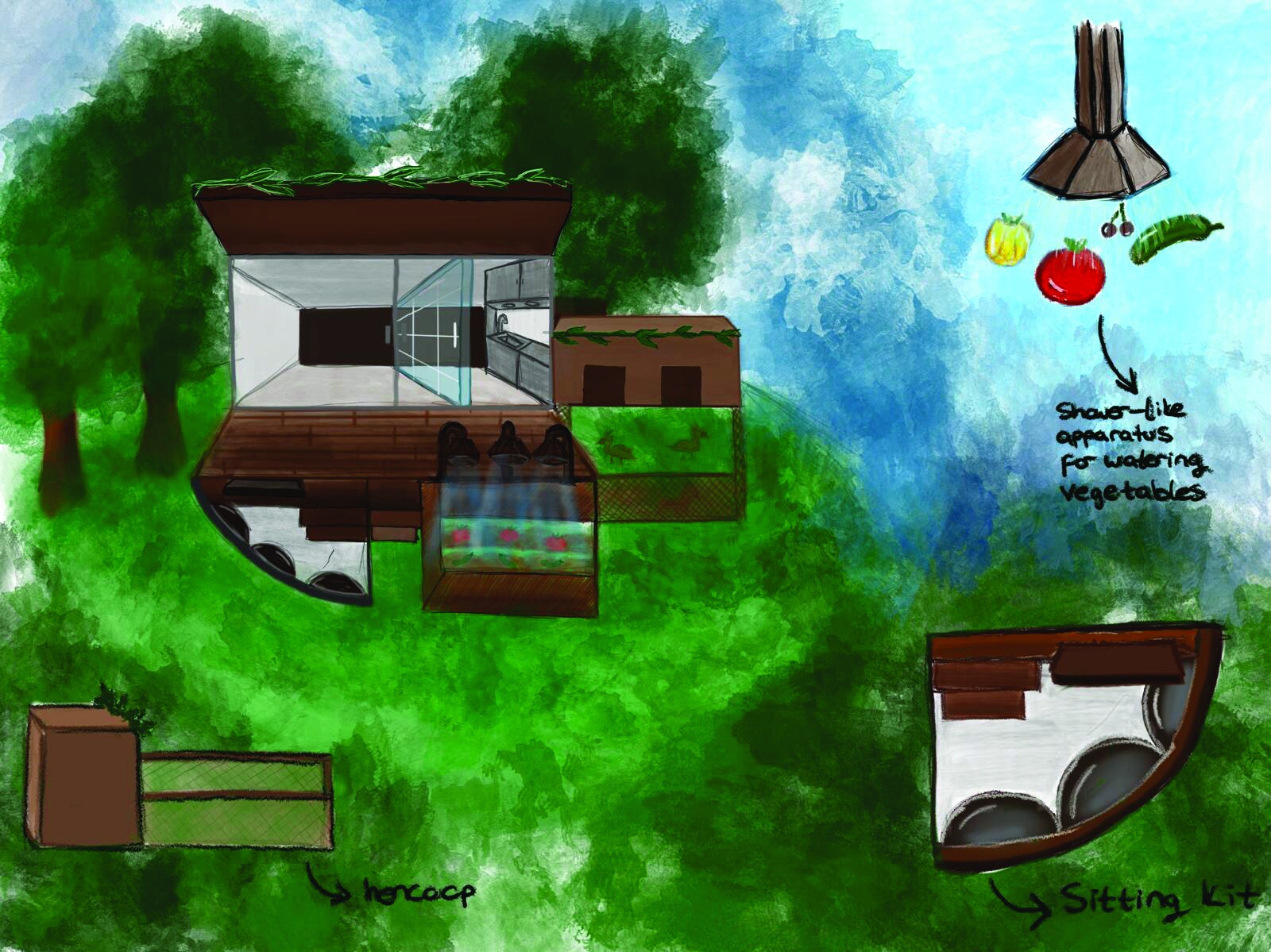
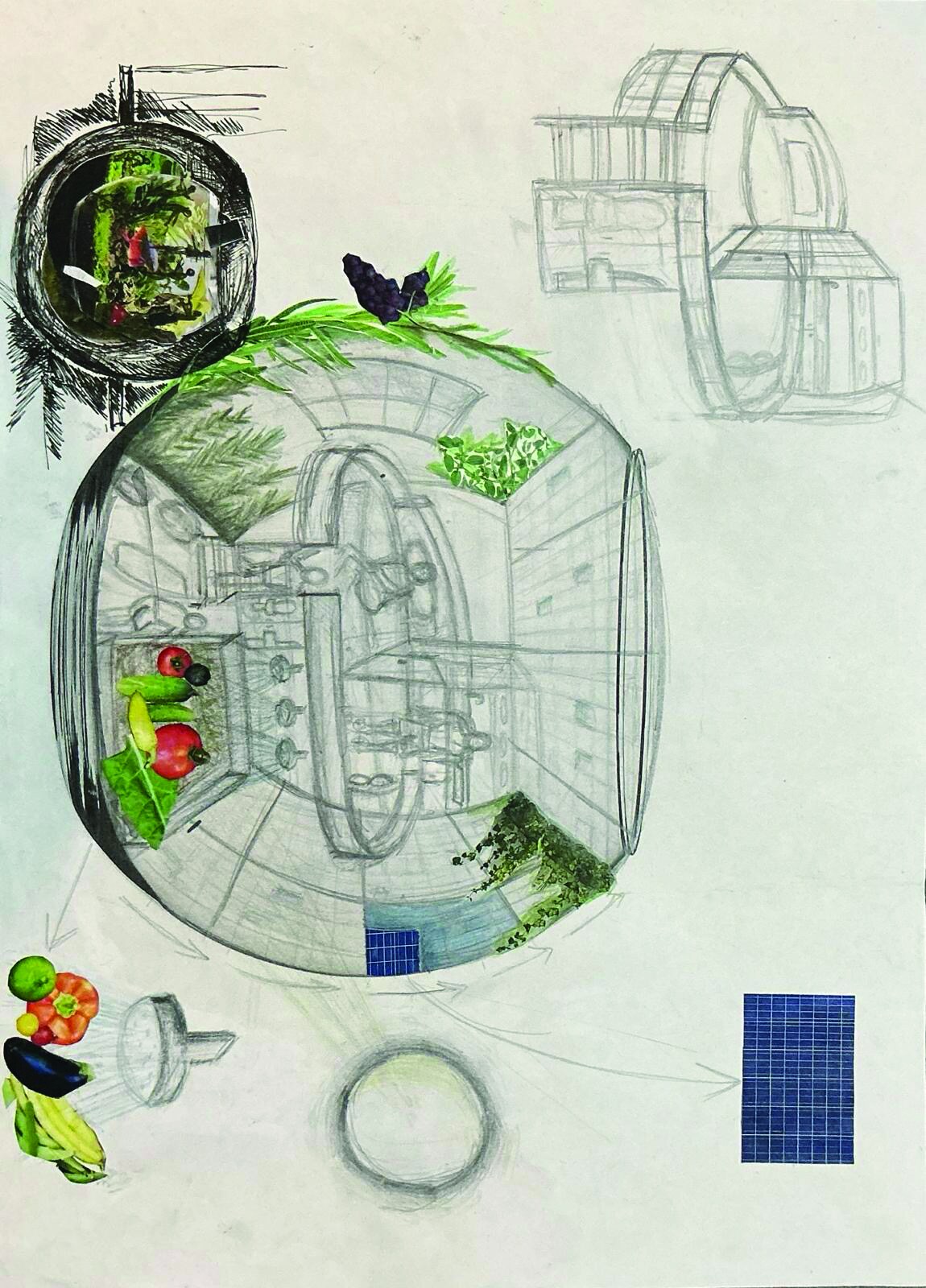
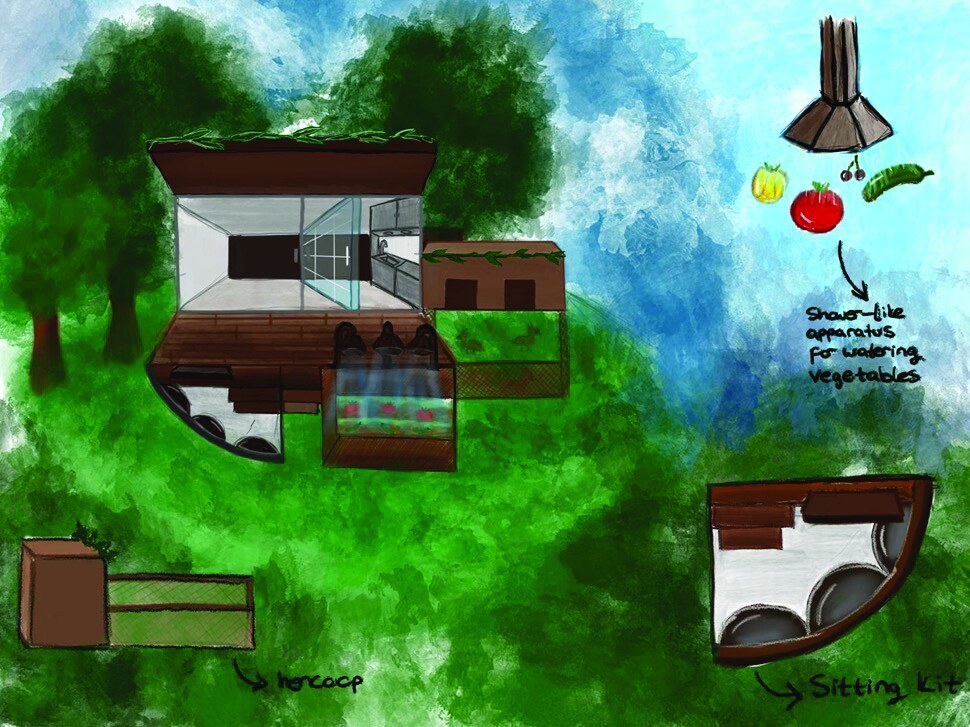
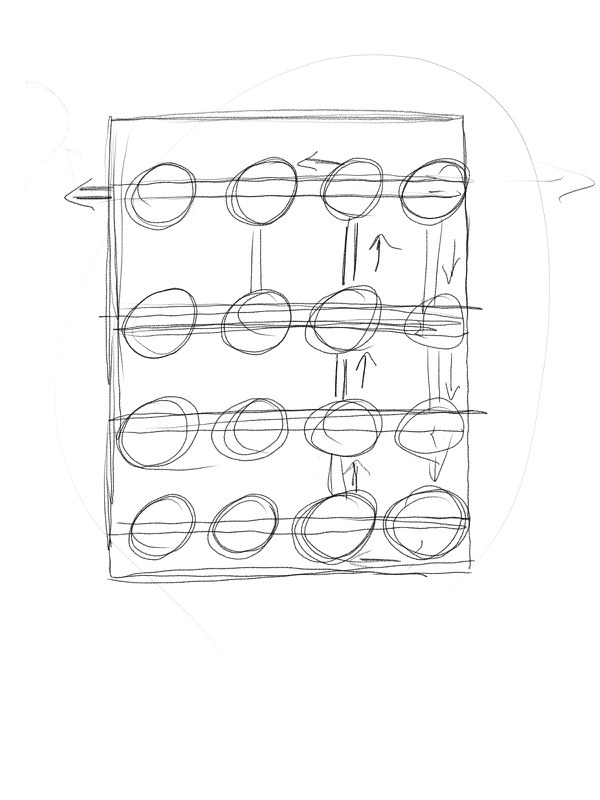
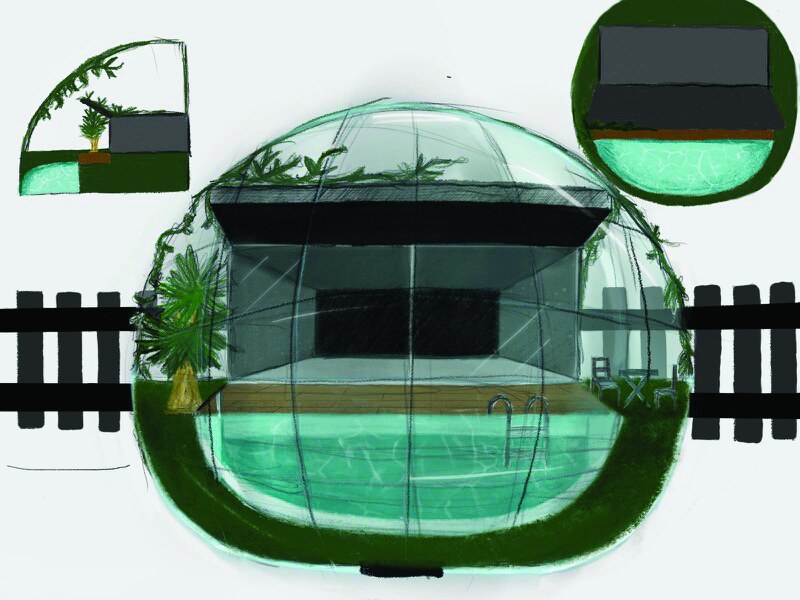
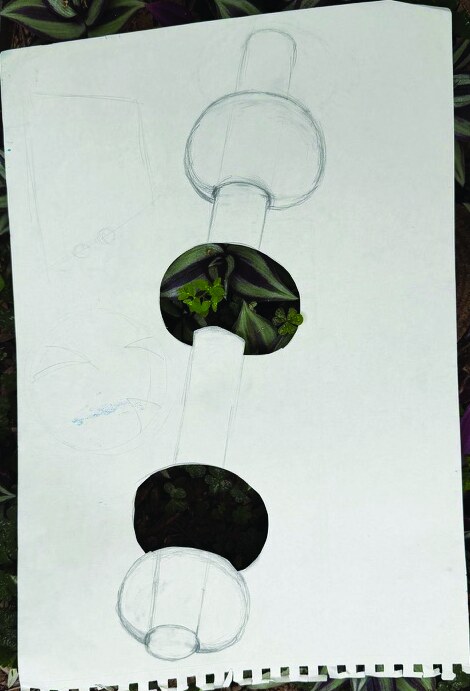
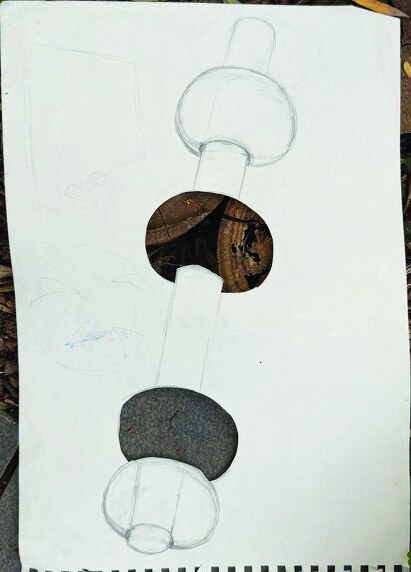
The starting point of the project was the abacus, a childhood toy that first made me enjoy mathematics. Its repetitive and movable structure inspired the modular logic of the design, leading me to think of architecture as a system that can shift, repeat, and adapt. Each sphere is a self-sufficient living module containing the essential functions of everyday life, alongside small areas for growing vegetables and fruits and for small-scale animal care, encouraging a more sustainable, nature-oriented lifestyle.
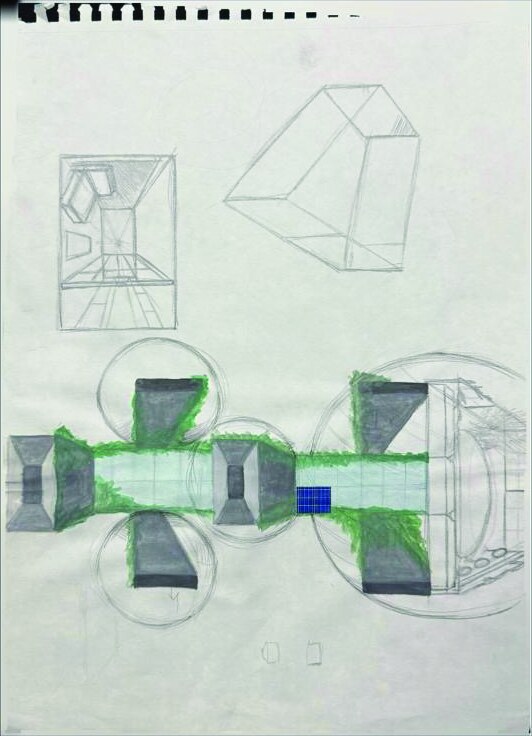
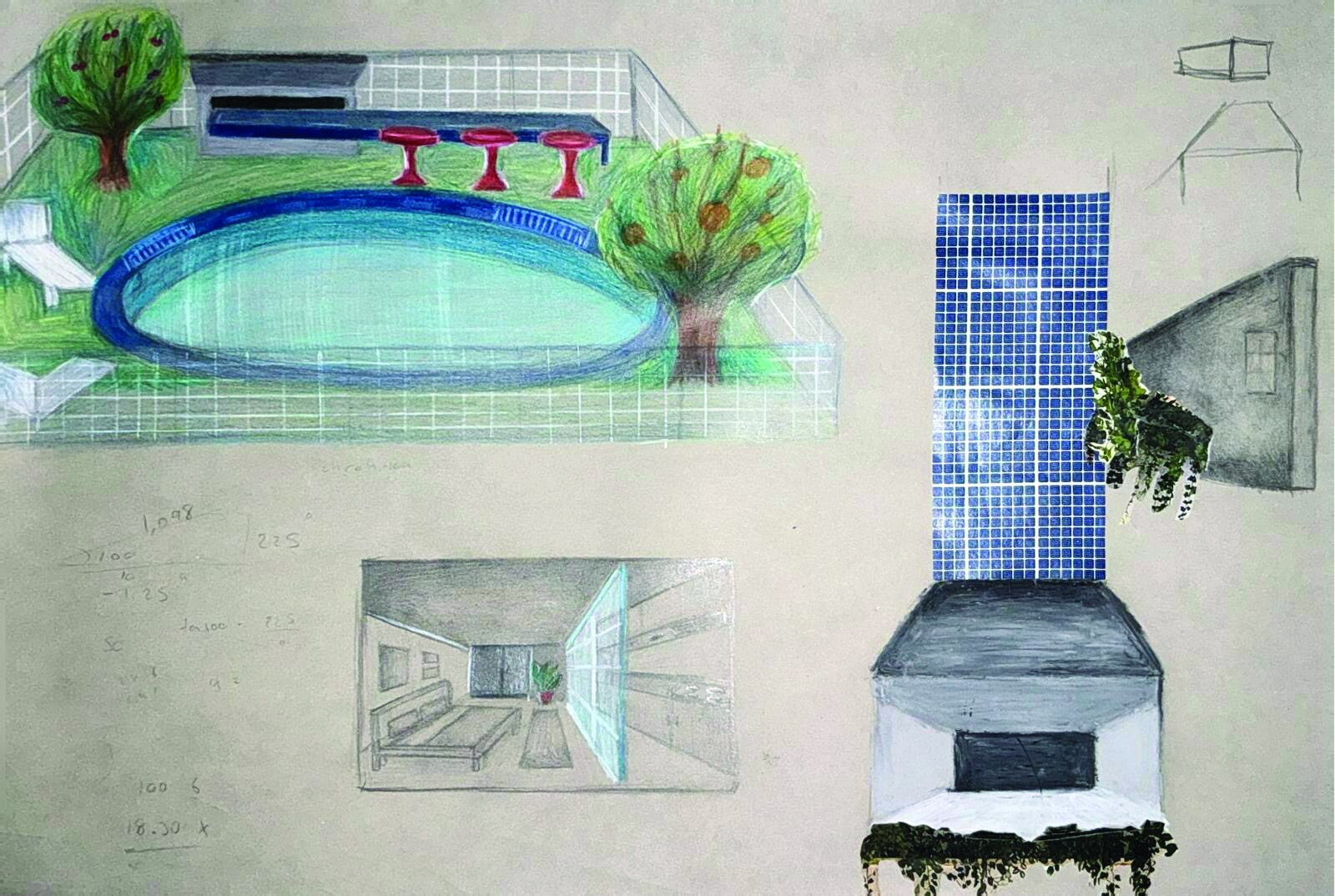
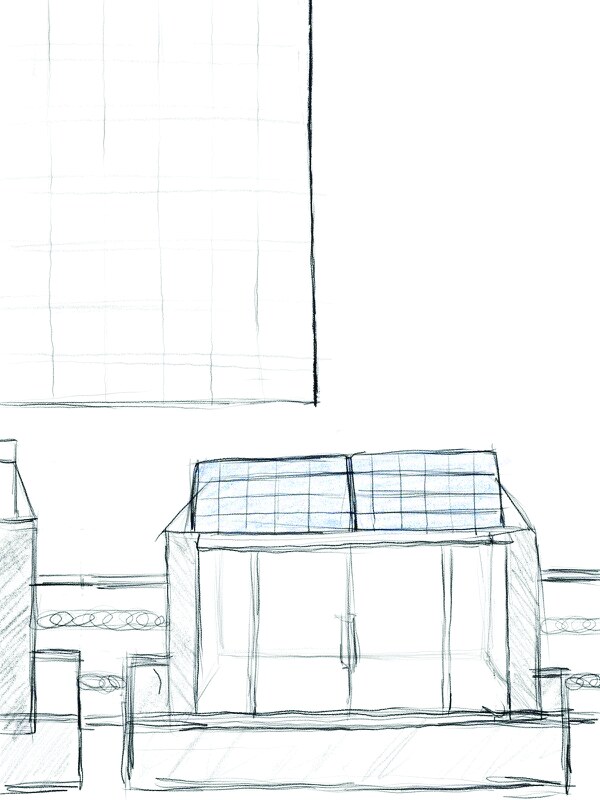
Each unit is enclosed by an outer shell covered with solar panels, allowing it to generate its own energy. The modules are connected through a movable rail system, so by periodically shifting positions each unit can receive an equal amount of sunlight and benefit fairly from solar energy production.
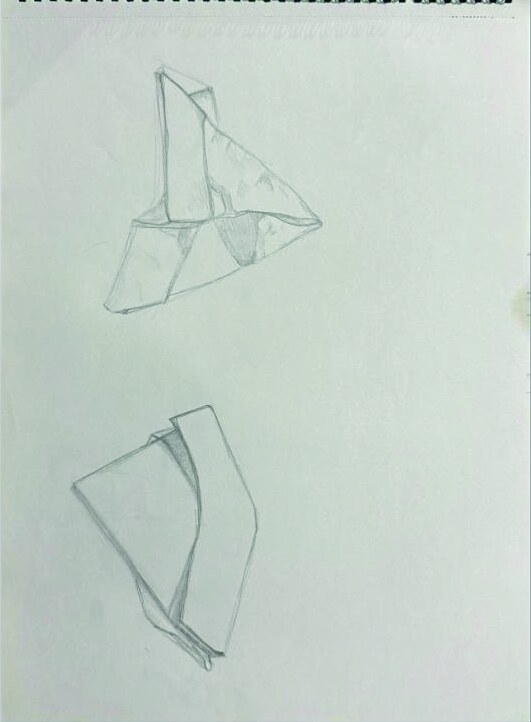
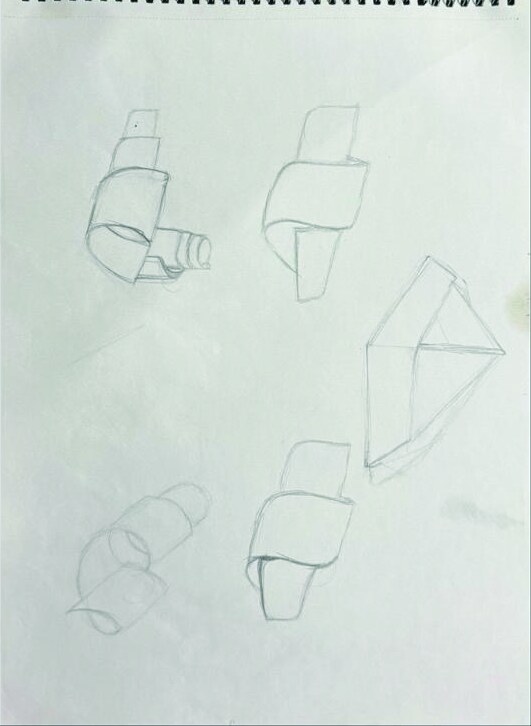
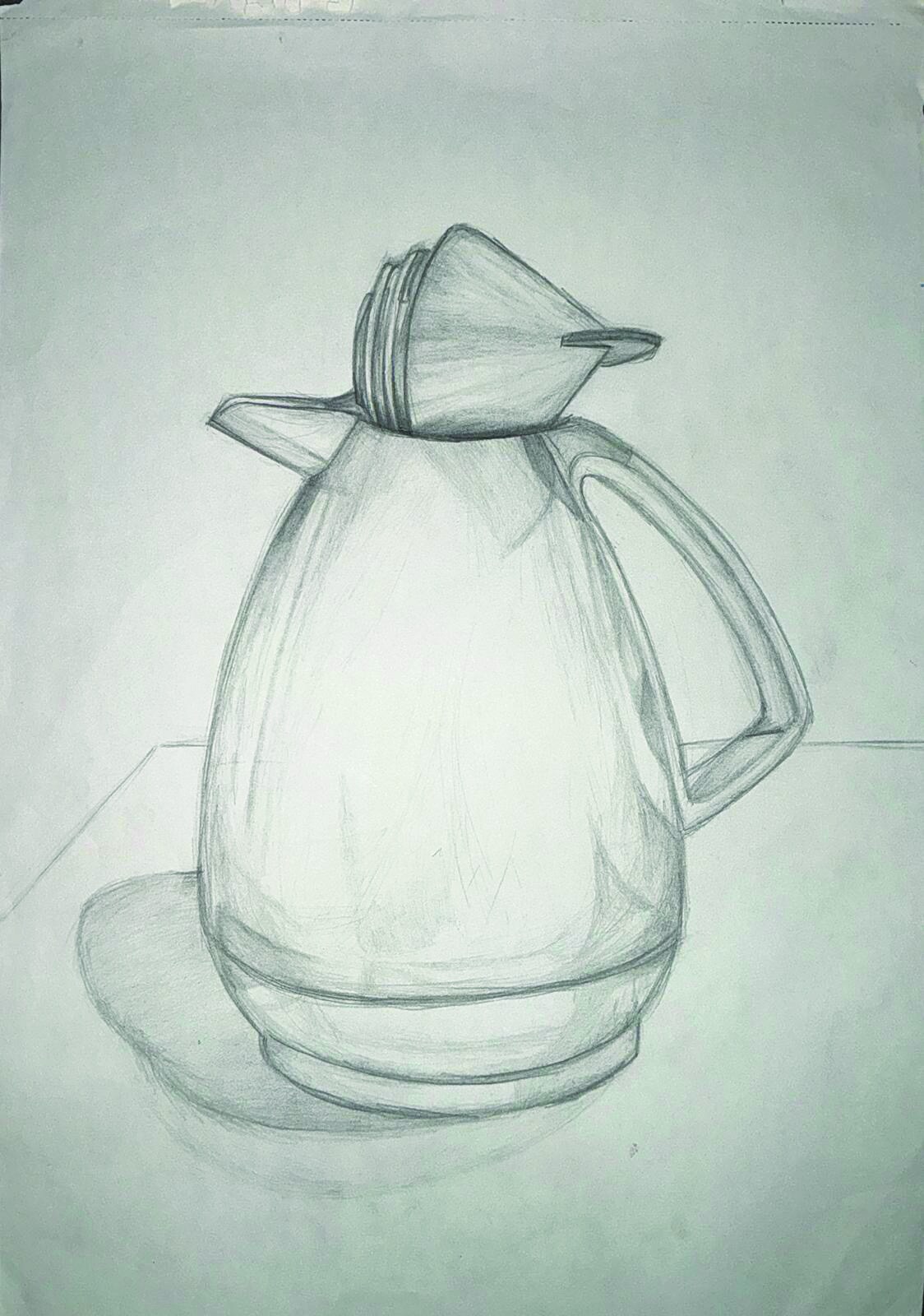
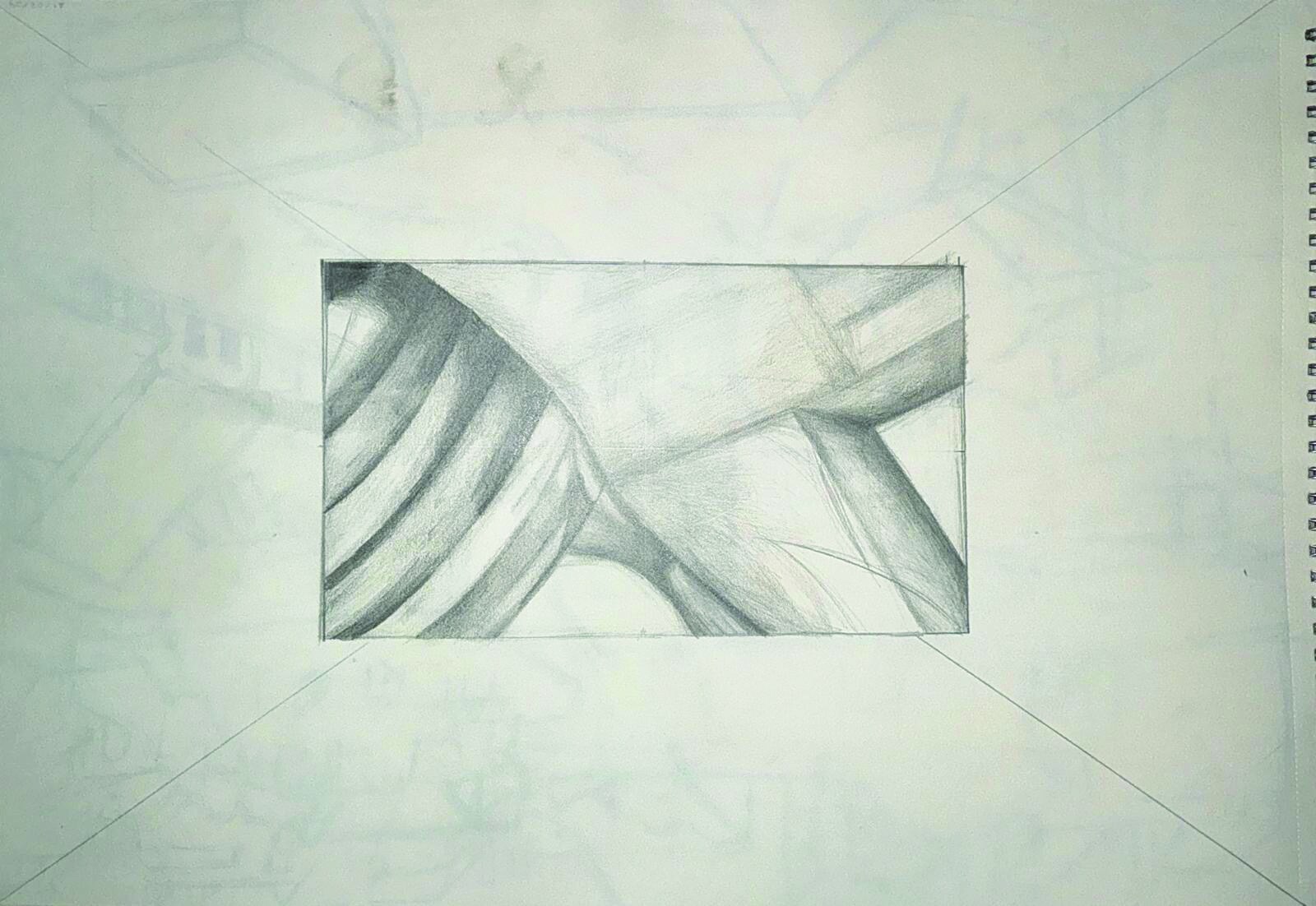
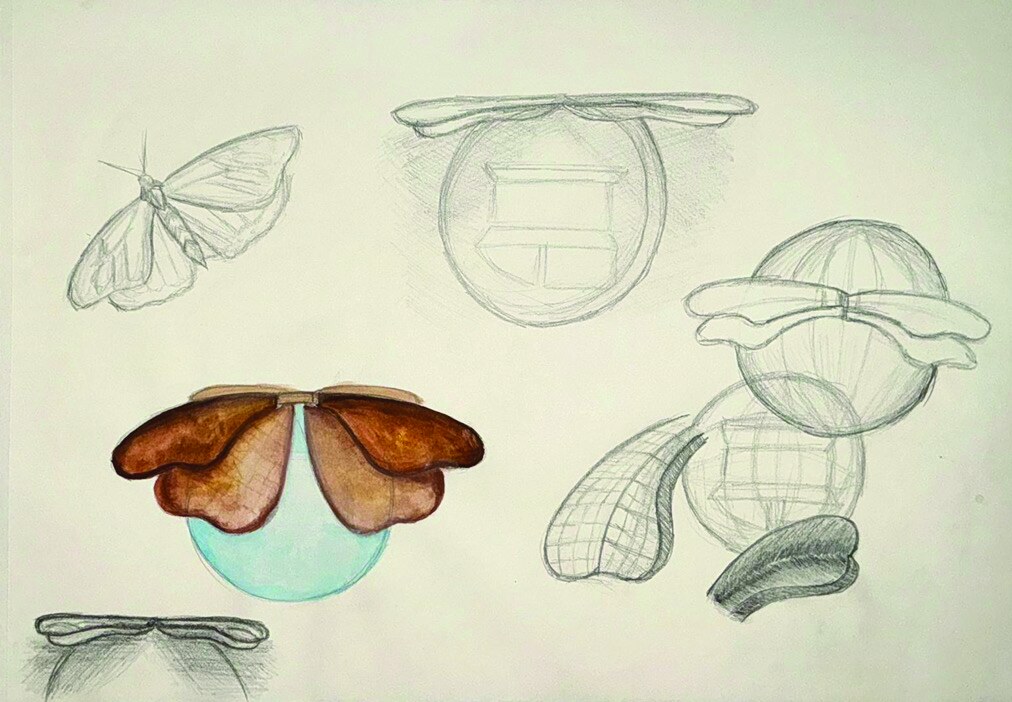
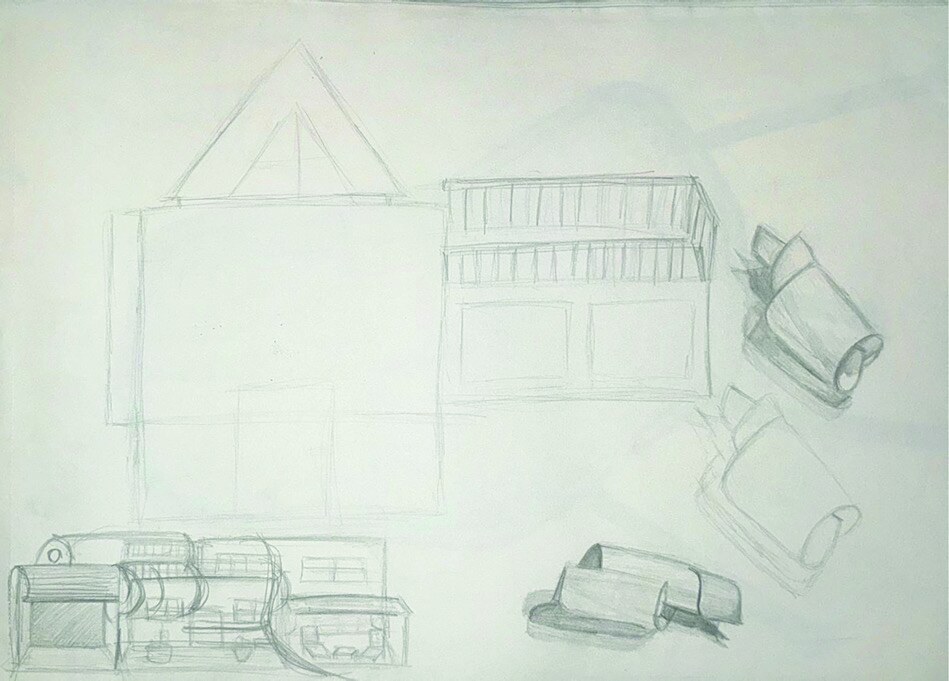
Earlier studies began from everyday objects — a kitchen chair, folded paper, a kettle — testing how the form of a familiar object could be translated into a compact living space. Alternative versions explored a butterfly, a fan, a pine cone, and an octopus, each transforming sunlight into usable energy through its own structural logic while also providing shade and cooling.
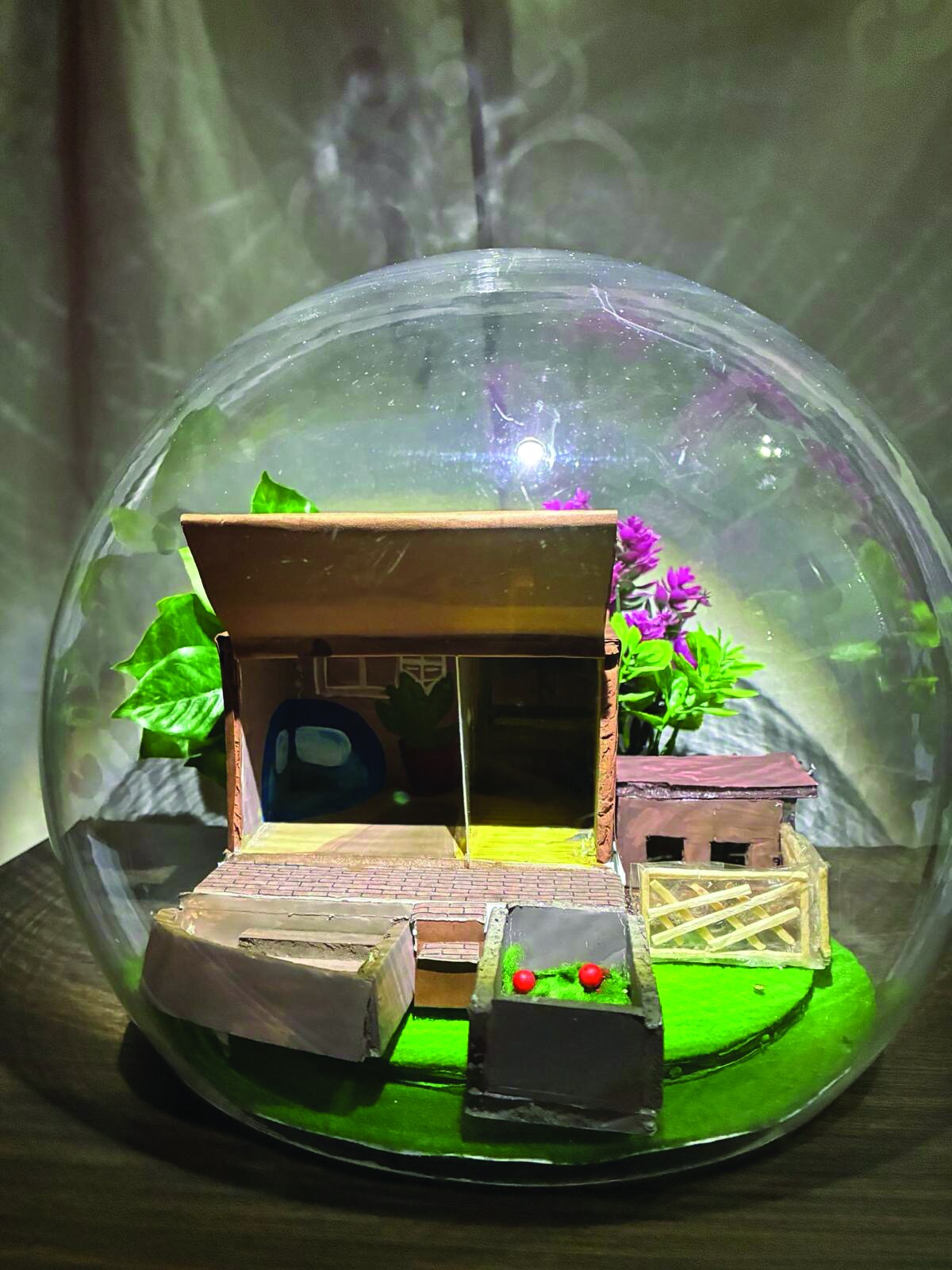
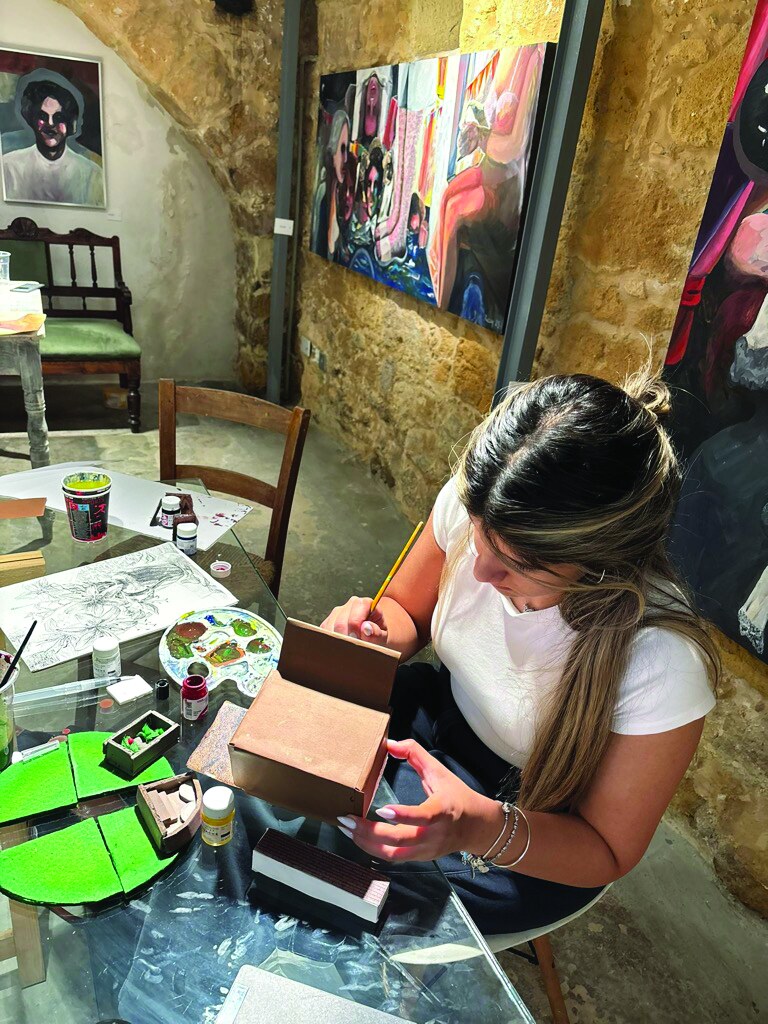
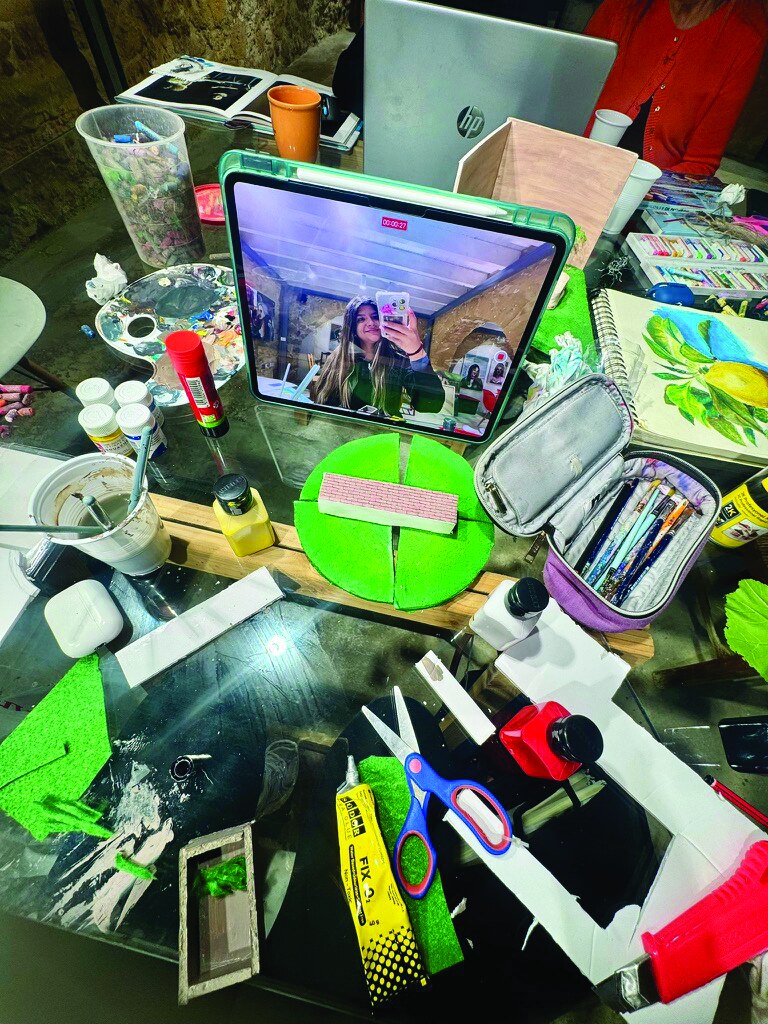
As the final step, I built a physical model, photographed it under different lighting conditions, and created an animation to present the project in a more mechanical, realistic way — drawing the rail system digitally as a vector diagram and combining it with photographs of each unit to show movement, structure, and overall mechanics.
Drawings & Images
25 plates